
The 100 Club

The 100 Club

We need to carry out some rather necessary refurbishment work on the kennels and buildings where many of the dogs are housed. This is become pressing, especially with winter coming. Like most charities money coming in goes on the day to day care, feeding and vets bills for the dogs, and there is often only just enough to cover this, let along to save up for building maintenance etc. So the idea is to find 100 people to each raise £100 in 100 days- which would give us the amazing amount of £10,000 which could make such a big difference. There are so many different ways this can be done, and its up to you to choose you method. Car boot sales, cake sales, swear tins at work, sponsored silence sponsored walks- or even a sponsored chest wax! All people who complete will be gifted a Devon Dog Behaviour Pin badge,a dn a vast amount of gratitude too! The first group began on 1st June- so end on 8th September, but you can start your 100 days when ever you want!
Fostercare

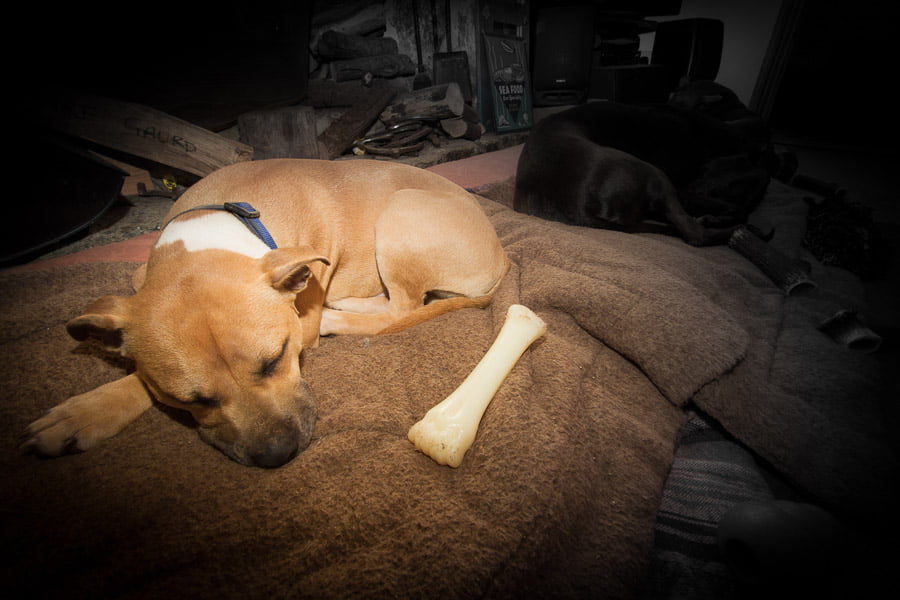
Sometimes, the final step before homing is spending time in foster care to complete a dog’s return to the world.

This teaches them about to the routines of family life and how to fit into it successfully.

Many people enjoy fostering as part of helping our dogs on their rehoming journey. Foster carers are a vital and valuable part of our team of helpers.

We are always looking for both long and short term foster homes to help with the dogs that we have in our care.

On occasion a dog may need ’emergency’ foster care. Having a team of willing foster homes enables us to help as many dogs as possible.

Over Nighters

For some dogs, a ‘night away’ is really beneficial. Different surroundings can help us learn how they cope with family life and provide vital homing information.

Also, behaviour that may not be as obvious on a day trip or walk, can manifest in the home and then be worked on. For example, different noises at night will affect some dogs more than others. This means that when the new home comes along, the dog is better equipped to cope.

Day Trips

The next stage is to get the dogs out and about in the world. Totnes, Newton Abbot and other towns and countryside are all nearby, providing a brilliant learning environment. Going out with trusted volunteers teaches the dogs about the wider world.

Some of the dogs that come to us have urban experience, but have never seen open fields, whilst others are ‘country dogs’ who find town a whole new challenge. By introducing them to these new environments in a controlled manner, we can help them to develop.

We are then in a better position to choose the right home for each dog whilst continuing their education.

Trips include outings to local attractions and beaches – which are all part of being a family member.

As you can imagine this takes a lot time and this is where our volunteers come into their own. Once we know that a dog is happy with a walker, a day out can be a really valuable part of their education, as well as a way to meet potential adopters.

Dog Walkers

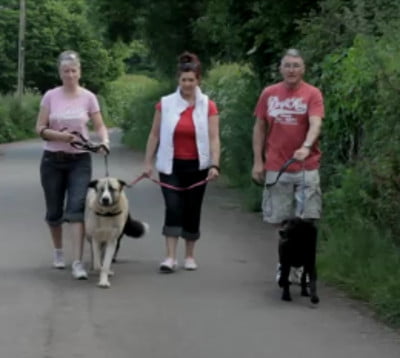
Part of the rehabilitation and daily routine of our dogs is to go out for lead walks. This exercises the body and mind whilst teaching lead manners. Once we are happy that they are ready, we like our dogs to go for walks with volunteers around the locality, either singly or in small groups.

This is the first part of a structured return to ‘The World’.